Share to
Product Model :
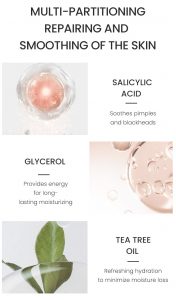
Salicylic Acid
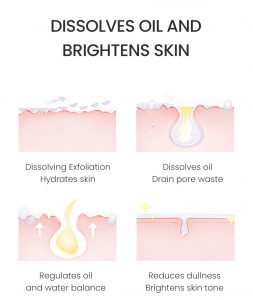
It’s oil-soluble. That matters. Most acne ingredients sit on the surface. Salicylic acid doesn’t. It gets into the pore — the actual pore — and starts breaking down what’s stuck in there. Oil. Dead cells. The stuff that clogs things up and makes pores look bigger than they are.
You won’t see a difference overnight. Give it a few weeks. Pores start looking cleaner. Less visible.
Tea Tree Extract
Tea tree is the calming one. It helps with redness. It helps with blemishes that are already there. And it helps keep oil from getting out of control — which, honestly, is half the reason breakouts keep coming back.
Less oil. Calmer skin. Fewer repeat problems.
Allantoin & Yeast β-Glucan
A quiet supporting pair. Allantoin handles the dry, tight feeling that salicylic acid can leave behind. Yeast β-glucan holds moisture and keeps things steady.
Skin feels soft after. Not tight. Not dry.
What You Can Expect Over Time
Nothing dramatic. Just steady change.
Pores look finer. Oil doesn’t come back as fast. Dark marks start fading — slowly, but they do. Dullness lifts. Skin feels smoother when you touch it. Makeup sits better. Your face stays calmer overall.
And breakouts? They show up less often.
That’s the whole point. Not a quick fix. Just skin that behaves better over time.r time.
Morning and night. That’s it.
After cleansing. Before moisturizer.
Take 3–4 drops. Dot onto forehead, nose, cheeks, chin. Press in gently with your middle and ring fingers. Don’t rub hard. Let it absorb.
If you’re new to salicylic acid, start slow. Once a day. Maybe every other night. Give your skin a week or two to get used to it. Then go morning and night.
It layers fine under makeup. No pilling. No waiting around.
And if you’re using it in the morning? Sunscreen. Always. Salicylic acid can make skin more sensitive to the sun, so don’t skip it.
A few things to keep in mind:
Don’t mix it with other acids. No retinol at the same time. No benzoyl peroxide in the same step. If you’re already using those, space them out — one in the morning, one at night, or alternate days.
If your skin feels tight or dry, cut back. Skip a day. Add a moisturizer on top. This isn’t a race.

External use only.
Keep away from kids.
Watch the eyes. If it gets in, flush with water. Don’t rub.
Skip it if your skin is broken. Sunburned, scraped, or irritated.td
Stop if it stings. If redness sticks around or gets worse, take a break.
Test it first. A little behind the ear. Give it 24 hours. Better safe than sorry.
Keep the cap tight. Store it somewhere cool, out of the sun.
One more thing. Morning use means you need sunscreen


Oily skin. Combination skin. Blemish-prone skin. You already know the routine.
Wash your face in the morning. By lunch, your T-zone is shining. Pores look larger. Makeup starts to slide. And somewhere on your chin, a new breakout is already forming.
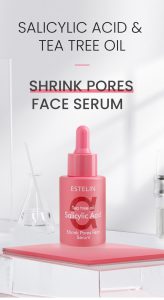
That’s the cycle this salicylic acid serum is made for.
It’s not a spot treatment. It’s not a mask you use once a week. It’s a daily face serum — three or four drops after cleansing, morning and night — that works quietly while you get on with your day.
For anyone searching for a serum for oily skin that actually fits into a real routine. For anyone who’s tried a face serum for acne and gave up because it left skin red and dry. For anyone who wants a pore refining serum that doesn’t feel like a punishment.
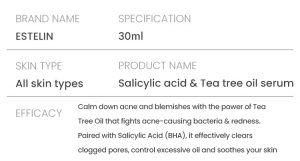
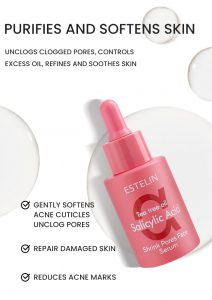
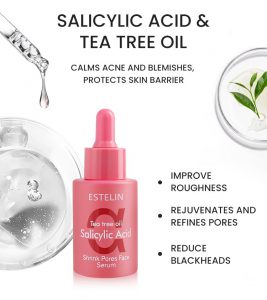
This is a serum for pores. A serum for acne-prone skin. A tea tree face serum and salicylic acid serum in one. It helps refine the look of pores, calm blemishes, and keep excess oil in check.
No pilling. No heavy feeling. No waiting around.
Use it alone. Use it with your usual products. Just don’t skip your sunscreen.
That’s the deal. Keep it simple. Stay consistent. Let the serum do its thing